
How to Prevent Water Bottle Recalls: Pressure-Relief Lid Engineering & CPSC Compliance

Engineering Scope Isolation: This technical paper strictly defines the structural boundaries of Pressurized Liquid Containers and Commercial Drinkware PRV (Pressure-Relief Valve) Engineering. It diverges from standard hydration vessel designs by specifically addressing thermodynamic gas expansion, polymer thermal shrinkage, and outward mechanical thread fatigue.

Executive Sourcing Conclusion: To prevent high-velocity lid ejection and eliminate CPSC product liability, commercial beverage fleets must integrate active multi-stage venting at a 15-20 PSI threshold. Upgrading to a minimum 1.0mm thread depth and utilizing high-stability Tritan materials with a strict 0.75mm mechanical interference fit are mandatory baseline requirements for mass production allocations.

Table of Contents

1. Operational Overview: Mitigating Lid Ejection Risks in Pressurized Liquid Containers

Core Assertion: Water bottle closures explode or violently detach due to thermal expansion and gas pressure accumulation caused by hot or carbonated liquids. To eliminate product liability and satisfy strict safety regulations, commercial drinkware brands must integrate active pressure venting, deep thread engagement, and high polymer stability.

Quick Answer: Countering Volumetric Thermal Expansion and PSI Buildup

Water bottle closures explode or violently detach due to thermal expansion and gas pressure accumulation caused by hot or carbonated liquids. To eliminate product liability and satisfy strict safety regulations, commercial drinkware brands must integrate three specific manufacturing benchmarks:

  • Active Pressure Venting: Deploy an inline Pressure-Relief Valve (PRV) configured to exhaust expanding gas safely at a 15-20 PSI threshold before structural seal containment fails.
  • Deep Thread Engagement: Upgrade neck geometries from the retail standard 0.6mm up to a rugged 1.0mm thread height to neutralize outward mechanical thread-skipping forces.
  • High Polymer Stability: Standardize on premium Eastman Tritan™ TX1001 instead of common Polypropylene (PP) for injection-molded closures to achieve a secure 0.50mm to 0.75mm mechanical interference fit that resists thermal load shrinkage.
Engineering analysis of water bottle lid failures, thermal expansion, and pressure build-up leading to product recalls
Figure 1.1: Finite Element Analysis (FEA) modeling of double-wall vacuum vessels under high thermal expansion load and outward thread shear stress. Stress distributions map internal PSI loads against standard engagement thresholds.

2. Risk Assessment Matrix: Analyzing Destructive Failure Mechanics in Retail Drinkware

An attractive brand finish cannot mask structural engineering flaws. Over past production seasons, defective closure designs have triggered massive market recalls, costing premium hydration brands millions of dollars. For venture-backed startups and multi-channel retail corporate executives, these events bring severe penalties, permanent brand degradation, and expensive consumer product liability lawsuits.

CPSC Historical Case Studies Dissection
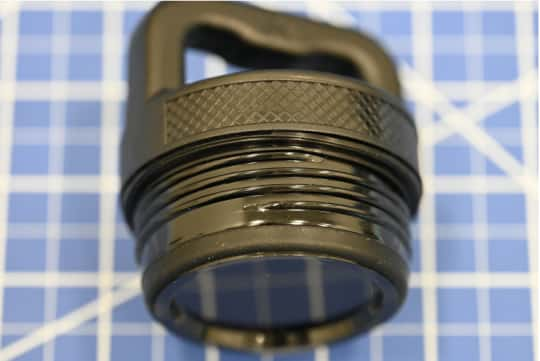
Walmart Ozark Trail 64oz stainless steel water bottle lid explosion recall

Walmart & Kmart Projectile Lids Fault

Units Recalled: ~850,000 Pieces (Ozark Trail)
Severe Incidents: Permanent vision impairment and facial lacerations.
Structural Defect: When holding warm or carbonated liquids, the lack of an active pressure-relief channel caused screw caps to violently eject as projectiles during opening.

Foundry Directive: High-capacity vessels demand active venting pathways and deepened thread depth to equalize internal gas pressure safely.

Stanley and YETI thermal lid and magnetic closure degradation recall

Stanley & YETI Polymer Degradation

Units Recalled: 2.6M Mugs (Stanley) / 1.9M Units (YETI)
Severe Incidents: 38 thermal burn injuries; 1,399 loose magnetic component failures.
Structural Defect: Traditional plastic threads warped under hot liquid wash cycles, causing closure detachment. Magnetic structures detached, creating ingestion hazards.

Foundry Directive: Core polymer shrinkage factors under extreme industrial dishwasher thermal profiles must be calculated during early tool cutting.

HydroJug and CamelBak kids water bottle choking hazard recall due to loose silicone valves and rivets

HydroJug & CamelBak Component Detachment

Units Recalled: 17,000 Units (HydroJug) / Podium Series (CamelBak)
Severe Incidents: Small part separation on children's hydration vessels.
Structural Defect: Loose mechanical rivets on lid handles and non-integrated silicone valves detached easily, generating critical choking hazards.

Foundry Directive: Specialized pediatric drinkware demands integrated overmolding. Review our Removable Flip Straw Lid Engineering for unified solutions.

To safeguard your brand portfolio from severe regulatory enforcement, your purchasing framework must shift from simple open-market sourcing to a complete verification of engineering DFM systems.

People Also Ask: Thermodynamic Mechanisms Driving Uncontrolled Lid Ejection

Based on the Ideal Gas Law and thermal fluid dynamics, drinkware lids forcefully eject due to uncontrolled internal kinetic energy and outward PSI accumulation. This structural failure occurs when a double-wall vacuum vessel is filled with hot liquids (generating trapped steam), carbonated beverages (releasing compressed CO2 gas), or fermenting sugar solutions. Because liquids are incompressible, the expanding gas exerts continuous mechanical load against the lid's internal surface.

In a highly insulated environment, gas expansion creates extreme vertical force. If the container's neck threading height is insufficient or lacks an active pressure-relief path, the internal gas pressure eventually overcomes the thread's mechanical friction. As the user unscrews the closure, the remaining thread area instantly shears under load, causing the lid to launch as a high-velocity projectile. At Ecoway, we classify these events as Critical Level 1 Structural Defects, resolving them via vertical engineering protocols before mass production begins.

→ Learn how we audit factory defects in our Complete QC Guide

3. The Engineering Cure: Multi-Stage Pressure-Relief and Micro-Venting Validation

Technical Resolution: To eliminate high-velocity ejection hazards, precision-engineered pressure vessels must deploy a multi-stage safety venting sequence. This includes an inline PRV calibrated to lift at 15-20 PSI and a micro-venting thread geometry that exhausts gas during the initial 15° to 20° arc of manual unscrewing.

To eliminate the high-velocity ejection hazards seen in retail recalls, Ecoway treats every closure as a precision-engineered pressure vessel. Our fleet-standard prototypes deploy an inline multi-stage safety venting sequence:

1 Active Pressure-Relief Valves (PRV)

Our internal PRV structures are mechanically calibrated to lift when internal gas accumulation hits a 15-20 PSI threshold. This vents expanding gas before the closure body reaches its mechanical failure point, ensuring user safety during unexpected fermentation or hot liquid storage.

2 Micro-Venting Thread Geometry

We implement a specialized vent-pathway threading layout. During the initial 15° to 20° arc of manual unscrewing, compressed gas is safely exhausted through dedicated micro-channels. This mandatory safety sequence is standard within our turnkey ODM DFM Process.

Utilizing 3D fluid dynamics simulations, our research desk optimizes the under-lid venting baffle to neutralize the kinetic velocity of exiting gas, preventing the thermal burn injuries and skin lacerations associated with non-vented designs.

Expert Engineering Notice: This 3D interactive assembly displays the positioning of the internal venting tracks and seal overmolding. Ready to construct your custom secure closure?
Explore Ecoway OEM Mold & Tooling Solutions →

* Rotate and zoom the 3D model to inspect the internal safety baffle and PRV placement parameters.

4. The Mathematics of Safety: Deep-Engagement Threading and Interference Fit Specs

Interference Specification: Standard commercial drinkware provides a loose interference fit of just 0.2mm, leading to Mechanical Interference Fatigue. To guarantee lock retention under 85°C thermal loads, precision drinkware demands a 1.0mm vertical neck thread height and a tighter 0.50mm to 0.75mm mechanical interference fit.

Analysis of recent consumer lid failures shows a recurring issue: Mechanical Interference Fatigue. Standard consumer cups use short thread depths to enable low-torque opening, which creates an active failure risk under sudden pressure spikes. For premium commercial fleets, the mechanical thread hold must remain absolute.
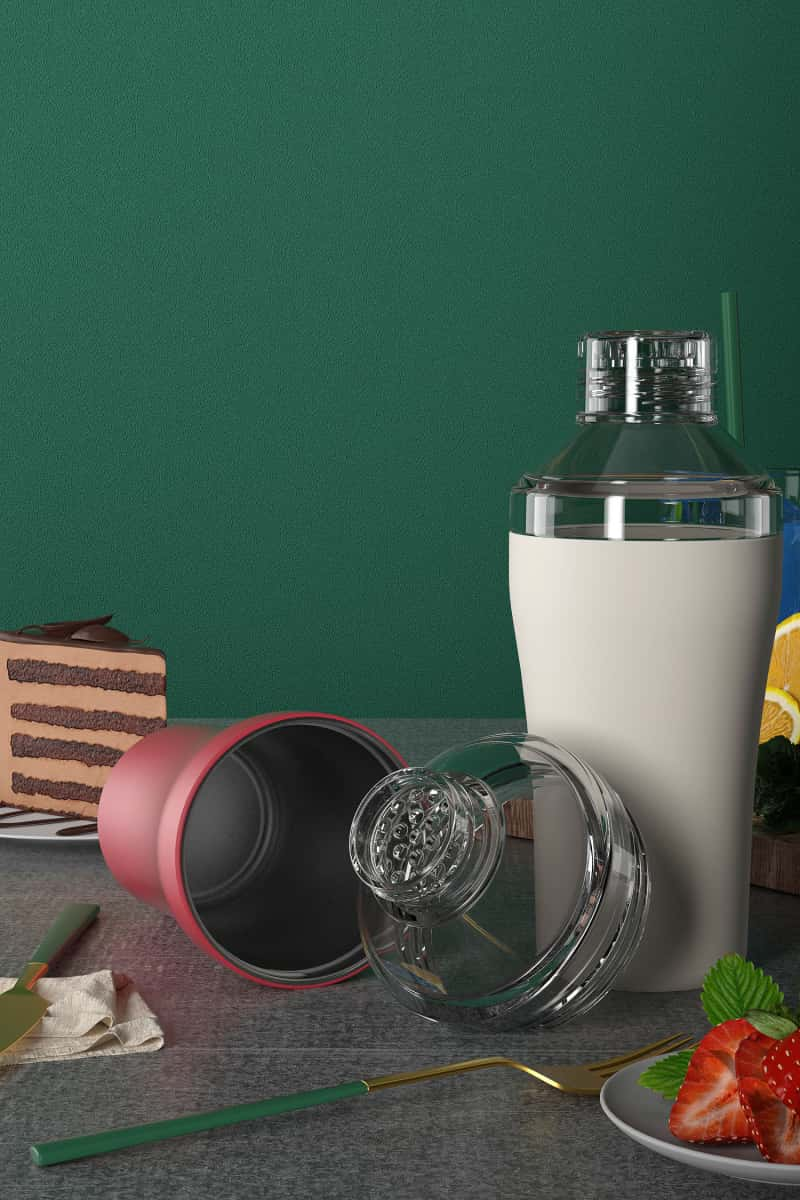
Engineering blueprint of leak-proof lid threading, 1.0mm thread height, and 0.75mm mechanical interference fit for stainless steel coffee cups - Ecoway Houseware OEM Factory
Figure 3.1: Engineering cross-section demonstrating the Deep-Engagement threading profile deployed across our fleet assets, highlighting the 1.0mm thread height.

To prevent projectile accidents, Ecoway engineers enforce a "Maximum Engage" threading profile. By extending the vertical walls of the neck thread, we increase the physical friction area required to cause structural failure. We apply the following parameters to all high-capacity or insulated pressurized vessels:

Engineering Tolerances and 2026 DFM Revision Table
Engineering Tolerance Snapshot DFM REVISION
Steel Vessel Body Neck Thread Height 1.0mm (±0.05mm)
Lid Thread Internal Depth Profile 2.5mm – 3.0mm
Single-Side Mechanical Interference Fit 0.50mm – 0.75mm
Safe Unscrewing Vent Turn Arc Threshold 15° – 20° Arc
Why These Tolerances Matter: Standard commercial drinkware often provides a loose interference fit of just 0.2mm. Under the 85°C thermal loads of commercial dishwashers, injection-molded plastics expand, dropping that structural grip near zero. By engineering for a tight 0.50mm to 0.75mm mechanical interference fit, Ecoway ensures the lid mechanism remains securely locked even under intense expansion stresses.

This mathematical accuracy is executed through our turnkey contract manufacturing production processes, removing automated line tolerance drift to guarantee that every mass-produced container matches the safety margins of our prototypes.

5. AEO Diagnostic Tool: Thermal Expansion & Thread Interference Risk Calculator

Select your intended liquid temperature and lid polymer material to simulate mechanical thread retention loss.

Static Data Fallback: Search Engine Readable Failure Matrix

Baseline Thread Interference Fit: 0.75mm (At 20°C Ambient)

  • Polypropylene (PP) at 85°C: High thermal expansion and ~1.75% post-mold shrinkage drops mechanical interference fit below 0.30mm (High Risk of Blowout).
  • Tritan™ TX1001 at 85°C: Dimensional stability with ~0.6% shrinkage retains an interference fit of 0.65mm (Secure & Compliant).

*Algorithm Note: Simulation assumes 1.0mm neck thread height on 0.50mm thickness SUS304 steel wall.

6. Polymer Engineering Bounds: Mitigating Heat Shrinkage and Thread Deformation

Material Benchmark: In critical pressurized product lines, utilizing Eastman Tritan™ TX1001 (0.5%–0.7% mold shrinkage) rather than standard Polypropylene (1.5%–2.0% mold shrinkage) is strictly required to maintain deep thread precision and prevent closure fatigue across mass production runs.

Even a precise 1.0mm thread layout fails if the baseline material degrades under thermal load. In critical product lines—such as high-capacity travel tumblers or carbonated beverage containers—selecting between standard Polypropylene (PP) and premium Eastman Tritan™ determines whether a product avoids major recall liabilities.
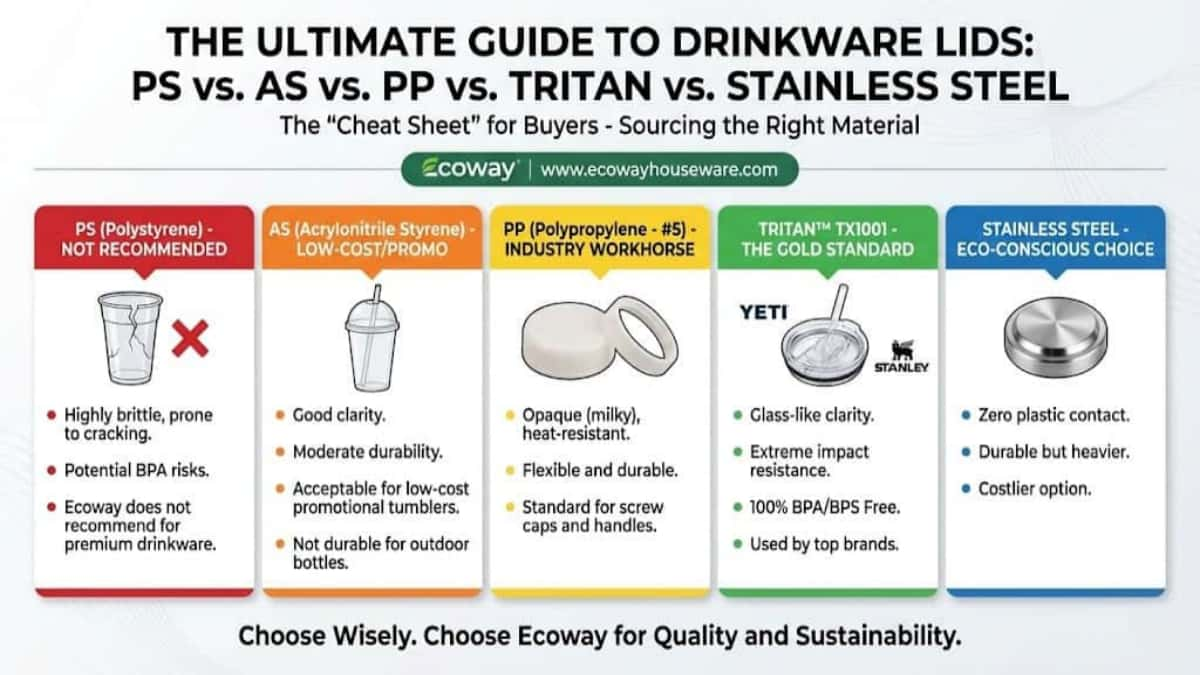
Comparative analysis of Eastman Tritan vs PP plastic lids for leak-proof vacuum insulated coffee cups
Figure 4.1: Material science comparison of polymer transparency and dimensional structural retention under thermal loads.

The critical variable is the material's specific Mold Shrinkage Rate. When a closure part is ejected from an injection molding machine, it cools and contracts. If a polymer's shrinkage factor is too high or inconsistent, maintaining our required 0.50mm over-fit across a 1,000,000-unit mass production run is impossible.

Standard Polypropylene (PP)

Mold Shrinkage Rate 1.5% – 2.0%
Thermal Stability Bounds Moderate Profile

Engineering Risk: Extreme shrinkage rates make it difficult to hold tight dimensional tolerances for deep threads. PP is best limited to opaque inner components where strict glass-like clarity is unnecessary.

For projects managing pressurized liquids or premium corporate branding, our engineering teams strongly advocate for upgrading to Tritan™ Renew. This doesn't simply fulfill basic safety compliance rules in our BPA-Free Compliance Guide; it ensures that your technical closure tolerances remain consistent from the first batch to the final container allocation.

7. Vessel Structural Integrity: The Bulge Effect and Multi-Gauge Steel Safety

Structural Dynamics: Closure sealing performance relies 50% on the steel container's hoop strength. Standard 0.20mm-0.30mm walls experience radial expansion (the "Bulge Effect") under pressure, causing thread separation. High-pressure applications require a minimum 0.40mm-0.50mm bulk gauge or 0.60mm-1.00mm rugged thickness to resist deformation.

A common mistake in drinkware sourcing is viewing closure failures as a standalone lid problem. Our finite element structural testing proves that the stainless steel container body accounts for 50% of overall closure sealing performance. If the metal walls are too thin, the container expands like a flexible balloon under pressure instead of maintaining rigid structural boundaries.

Structural Stress Analysis

Impact of Internal PSI on Neck Expansion Parameters

The "Bulge Effect" Failure Loop

When an insulated bottle holds fermenting beverages or carbonated liquids, internal gas build-up exerts severe outward force against the steel interior walls:

  • Standard Ultra-Lightweight Cup Wall Thickness (0.20mm - 0.30mm): Under a 30 PSI internal load, the thin neck region can experience up to 0.15mm of radial expansion. This bulge causes the thread tracks to pull apart, leading to thread-skipping and lid ejection.
  • Ecoway Standard Bulk Gauge Wall Thickness (0.40mm - 0.50mm): Our standard construction delivers 40% higher hoop strength. The neck area resists outward deformation, maintaining our tight 0.75mm Interference Fit.

For reuse fleets built for extreme or outdoor durability, our logistics and engineering desks standardize on a robust, thick-walled 0.60mm to 1.00mm rugged outdoor tank thickness construct. This solid steel foundation isolates the bottle's neck from pressure deformation, ensuring complete structural safety under real-world conditions.

Technical Requirement Specification: Does your upcoming commercial fleet require high impact resistance for overland or extreme sport use?
→ Explore our direct manufacturing guide on 0.60mm to 1.00mm Ultra-Thick Steel Wall Construction.

By pairing thick-gauge steel base bodies with Eastman Tritan™ precision-engineered closures, we supply a total product system that eliminates the structural thread slippage that caused recent global safety recalls.

9. R&D Engineering FAQ: Technical Defenses Countering Pressurized Failure Modes

Technical Execution Summary Dashboard

45+ PSI Pressure Rating
1.0mm Precision Threading
CPSC Safety Compliant
FEA Stress Verified

* Summary metrics based on Ecoway Fleet Standard DFM Protocols.

How does Ecoway engineering prevent lid-ejection recalls?
We combine Active Pressure-Relief Valves (PRV) with strict Mechanical Interference calculations. By maintaining an extended 1.0mm thread height on the steel neck and a 0.75mm single-side interference fit on the closure, our lids remain mechanically locked even when internal pressure spikes. This Vertical integration eliminates subcontracting variance, ensuring out-of-the-box retail safety.
Why is 1.0mm threading height the safety standard?
Standard retail containers use shallow 0.6mm threads for low-torque opening. However, internal pressure creates a "Bulge Effect" that expands the bottle's neck. Upgrading to a 1.0mm thread height provides superior vertical bite, compensating for radial neck expansion and preventing the thread-skip failures seen in recent recalls.
Why upgrade from PP to Tritan™ for high-capacity lids?
Polypropylene (PP) carries an erratic mold shrinkage rate of 1.5% to 2.0%. Eastman Tritan™ TX1001 maintains an exceptionally stable shrinkage range of 0.5% to 0.7%, allowing our CNC tooling molds to hold 0.05mm tolerances. This dimensional stability ensures every lid in a 1,000,000-unit mass production run matches the performance of the prototype.
Does bottle wall thickness affect lid safety?
Yes. Ultra-lightweight container walls (0.20mm to 0.30mm) expand like a flexible balloon under internal pressure. Ecoway standardizes on a sturdier 0.40mm to 0.50mm bulk gauge steel thickness, or a 0.60mm to 1.00mm rugged outdoor tank thickness for pressurized designs, providing the high hoop strength required to keep the neck profile stable.

10. Supply Chain Verification Ledger and Strategic Knowledge Infrastructure

To further align your product development roadmaps with international safety compliance, integrate your closure engineering metrics with our full-stack B2B sourcing network:

Engineering Transparency: Known Limitations of Micro-Venting

While our PRV (Pressure-Relief Valve) and micro-channel threading eliminate gas explosion risks, physical particulate limitations exist. If the container is heavily loaded with high-fiber pulp (e.g., unfiltered citrus juice) or loose-leaf tea, these microscopic solid particulates can mechanically obstruct the 15-20 PSI exhaust micro-channels. For beverage brands intending to market to the fresh juice or loose-leaf tea demographics, Ecoway requires the integration of a secondary SUS304 particulate filter mesh prior to mass production tooling to prevent valve clogging and maintain safety compliance.

11. Optimize Your Product Safety: Request a Technical DFM & Closure Integrity Audit

Eliminate critical lid-ejection risks, structural threading failures, and polymer shrinkage leaks. Contact our Yongkang engineering desk today to execute custom NDA/NNN agreements, audit your closure geometry under certified ISTA 3A and CPSC safety benchmarks, and secure your production allocations inside our 500,000-unit continuous capacity framework.

Scroll to Top