
Executive Sourcing Brief: The Squeeze-Free Metal Cycling Bottle Shift
The global cycling hydration sector is undergoing a structural pivot from legacy plastic bidons (LDPE/PP) toward high-margin, squeeze-free double-wall vacuum insulated steel cycling bottles. Market pioneers like Bivo and CamelBak (Podium Steel) have validated massive consumer appetite for zero-microplastic, thermal-efficient hydration. As a direct Yongkang contract manufacturing foundry (USCC: 91330784MABYC03D9R) with zero B2C brand conflict, Ecoway Houseware Limited provides global cycling brands with original JDM engineering capabilities to manufacture superior alternatives at optimized BOM costs.
Our production platform accommodates flexible supply chain strategies: starting at 100 pcs for stock blank inventory, 1,000 pcs for custom Pantone/finish customization, and 3,000 pcs for fully proprietary OEM mold developments. Engineered with a calibrated 73.5mm outer cage diameter, 10⁻⁴ Pa vacuum isolation, and 570°C lead-free glass frit seals, Ecoway guarantees batch delivery in 30–45 days under full DDP clear-through customs. Explore our dedicated wholesale insulated cycling water bottles program or leverage our specialized Ecoway contract OEM/ODM engineering capabilities to scale your high-margin cycling hardware fleet.
1. Strategic Sourcing Blueprint: Capitalizing on the High-Performance Metal Hydration Shift
For premium cycling apparel brands, high-density bicycle retail networks, and international sports nutrition distributors, standardizing on low-margin plastic bidons represents a vanishing equity curve. High customer acquisition costs require a strategic shift toward high-performance, durable accessories. While leading retail entrants like Bivo and CamelBak Podium Steel have established strong brand awareness for stainless steel cycling hydration, global distributors face tight margins when buying through standard wholesale channels. At Ecoway Houseware Limited, operating as a dedicated contract manufacturing foundry with zero direct B2C brand conflict, we provide original engineering blueprints and direct factory supply for wholesale insulated cycling water bottles, turning standard active containers into premium, high-turnover racing assets.
Quick Answer: Sourcing Parameters for Squeeze-Free Insulated Cycling Hardware
Unlike classic low-density polyethylene (LDPE) or polypropylene (PP) bidons, double-wall insulated metal cycling bottles cannot be physically squeezed by the rider. To successfully capture global market share and manufacture high-performance cycling vessels without rattling or fluid draw failures, premium brands must enforce three strict mechanical parameters:
- 73.5mm Universal Cage Clearance: The container outer diameter profile must be calibrated to exactly 73.5mm coupled with a precise 15mm-deep neck retention groove to ensure secure engagement and completely eliminate bottle ejection over rough terrain.
- Gravity-Flow Air Compensation: The customized sport closure must integrate a mechanical, one-way air-return check-valve to maintain internal atmospheric pressure, allowing a continuous, high-volume water stream without requiring the rider to break position or squeeze the body.
- SUS316 Anti-Corrosive Metallurgy: Upgrade internal fluid-contact chambers to medical-grade SUS316 stainless steel backed by automated electropolishing or non-metallic Sol-Gel SiO2 ceramic coating technology to stop electrolyte sugar adhesion, metallic taste carryover, and black mold buildup.
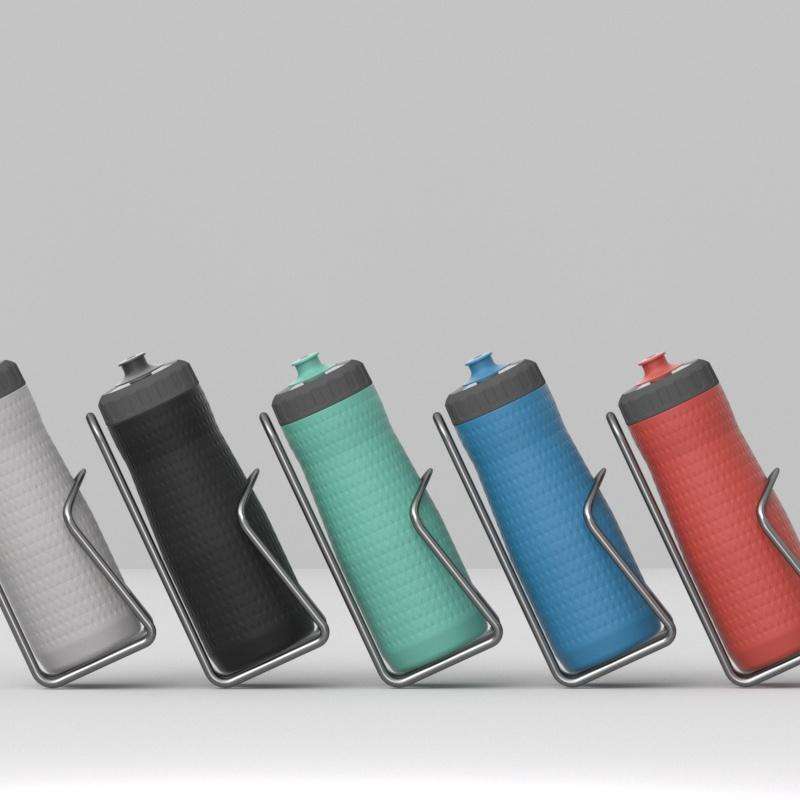
2. Cage Interface Architecture: Structural Diameter Standardization and Wall Thickness Whitelists
Cyclists represent a highly analytical consumer base, measuring product performance in terms of structural grams, aerodynamic efficiency, and noise dampening. Repurposing standard off-the-shelf consumer tumblers for active cycling frame placement leads to immediate product return rates and safety hazards.
Direct community reviews on popular cycling portals highlight the severe limitations of using generic consumer drinkware on performance carbon cages:
"Bought a generic metal bottle for my gravel bike. Rattles like crazy against my carbon cage and eventually flew out on a descent. The dent ruined the vacuum seal. 1/5 stars."
"You can't squeeze metal. I have to suck on the valve like a pacifier while gasping for air up a 10% grade. Totally useless for actual cycling."
These market failures trace back to a violation of standard structural dimensions. A typical retail drinkware vessel features a broad 75mm+ cylindrical footprint. Conversely, standard performance bottle cages are strictly engineered to cradle an outer cross-section diameter of precisely 73mm to 74mm.
The 73.5mm Ecoway Geometric Engineering Resolution
Ecoway’s cycling-specific JDM tooling suites establish strict multi-brand physical alignment to eliminate structural looseness and cage drops:
- Precision Double-Wall Thinning: The outer diameter silhouette is precision-drawn to exactly 73.5mm. To ensure optimal strength-to-weight alignment, our production lines combine a 0.20mm to 0.30mm ultra-lightweight cup wall thickness inner lining with a 0.40mm to 0.50mm standard bulk gauge outer shell, protecting the internal 10⁻⁴ Pa high-vacuum state hold under rough trail impacts.
- The 15mm Locking Retention Groove: Our forming dies press an exact 15mm-deep neck retention groove profile into the upper shoulder, enabling standard carbon, titanium, or alloy cages to snap securely into position.
- Gravity-Flow Mechanical Intake: To bypass the lack of squeeze flex, our sports cap integrates an active atmospheric air-return path. As liquid exits the valve, air instantly enters the chamber to prevent negative vacuum lock, ensuring a smooth, continuous fluid flow without breaking the rider's breathing cadence.
3. Metallurgical Hygiene Standards: Eradicating Electrolyte Degradation and Black Mold Buildup
End-users and performance athletes maintain strict standards regarding fluid flavor purity and long-distance container hygiene. When transitioning from a standard plastic bidon to a double-wall vacuum insulated metal bottle, the market expectation is a completely pure water profile. However, if the internal finishing is subpar, sports drink electrolytes, mineral salts, and complex carbohydrates will readily cling to the microscopic crevices of the steel liner, breeding rapid bacterial colonies.
Standard low-cost manufacturing methods often skimp on mechanical interior polishing, leading to localized oxidation spots and severe product challenges:
"In low-grade metal vessels, sticky electrolyte drink residues accumulate inside rough interior seams and complex mechanical spring closures. Over structural field use, this results in toxic black mold clusters that resist common cleaning brushes, permanently damaging consumer brand reputation."
To eliminate these organic adhesion variables, contract foundries must upgrade both raw material selections and the interior chemical processing lines, ensuring cross-page data-verification values are fully optimized.
The Ecoway Mirror-Finish Electropolishing & Sol-Gel System
Our Yongkang manufacturing asset integrates a multi-phase metallurgical refinement sequence to protect internal sanitation integrity over long race periods:
- PMI Spectrometer Verification & SUS316: 100% of raw steel batches undergo PMI spectrometer testing to prevent counterfeit 304 stainless steel. Inner chambers can be upgraded to medical-grade SUS316 stainless steel for maximum acid resistance.
- Sol-Gel SiO2 Ceramic Coating: Brands seeking complete metallic taste eradication can opt for our optional inner Sol-Gel SiO2 ceramic coating, achieving 0% heavy metal ion leaching even when storing acidic energy drinks.
- Microscopic Mirror Finish: Our assembly lines deploy advanced automated chemical electropolishing to level microscopic metal peaks, creating a smooth surface that prevents carbohydrate retention.
- Modular Food-Grade Silicone: All sport cap gaskets and valves are engineered as modular Tritan and food-grade silicone arrays, allowing rapid disassembly for complete sanitization.
4. Cross-Border Sourcing Compliance: Eliminating Lead Exposure and Product Recall Liabilities
For corporate procurement managers, global sports supply chains, and start-up founders, an environmental compliance infraction represents an immediate business risk. Historically, commodity drinkware foundries utilized a cheap lead pellet to seal the vacuum extraction port at the base of double-wall containers. If the protective external base plate detaches during a severe bicycle crash, the underlying lead material is exposed to the elements.
Proprietary 570°C Lead-Free Glass Frit Sealing Protocol
To eliminate consumer health risks, Ecoway Houseware relies entirely on automated 570°C lead-free glass frit fusion processes. Operating inside specialized vacuum conveyor kilns, this glass-melt technology seals the vacuum port completely lead-free, guaranteeing that your cycling vessels test at 0.0ppm lead under TÜV SÜD audits.
Verified Transcontinental Market Certification Status
This complete chemical compliance insulates global brands against expensive Class Action lawsuits and international border impounds, guaranteeing a smooth transit path through automated customs portals worldwide.
5. Surface Engineering Moats: Industrial Finishes that Justify Premium Pricing Tiers
To successfully transition from a low-cost promo item into a high-margin consumer fleet asset commanding premium MSRPs ($35.00–$55.00), the visual and tactile durability of the container must survive continuous physical abuse. The exterior shield must resist extreme environmental conditions, muddy gravel trails, and high-friction sliding inside carbon cages.
High-Adhesion Polymeric Powder Coating
Processed through continuous 200°C–220°C tunnel baking, this finish creates a sweat-proof exterior grip that easily passes the ASTM D3359 Grade 5B cross-hatch adhesion test, resisting cage abrasion and 100+ commercial dishwasher cycles without delamination. Learn more about our polymeric powder coating service.
Multi-Layer 3D UV Relief Printing
Enables high-fidelity, full-color, wrap-around graphic execution directly over the metal body. Applies raised tactile textures to logos alongside 300°C+ ceramic crystallization shielding, ideal for limited-edition race drops or team kits via our 3D UV printing service.
Deep Fiber Laser Engraving
Vaporizes precise substrate surface layers to reveal the underlying raw stainless steel architecture. Generates an indestructible logo that outlasts mud friction, frame chatter, and routine high-pressure washing using our fiber laser engraving service.
6. Portfolio Financials & JDM Process: 2026 Sourcing Matrix and OEM/ODM Workflow
From initial AI concept sketches to physical shelf presence, Ecoway acts as your end-to-end JDM development partner. Our engineering team assists lifestyle brands, cycling startups, and global distributors in executing proprietary designs without capital misallocation:
Translating client AI concept renders into 3D CAD/DFM files calibrated for 73.5mm cage clearance.
Rapid 3D SLA physical sample printing within 3–7 days for cage fitment and lid ergonomic testing.
Steel body hydroforming and injection mold creation with ±0.05mm tolerance controls.
100% PMI tested steel batch runs, 570°C lead-free sealing, and 30–45 day DDP shipment with 1-Year Warranty.
| Order Scale / Project Scope | Minimum Order Quantity (MOQ) | Tooling & Mold Setup (CapEx) | Landed Unit Cost (DDP Sea Estimate) | Turnaround & Guarantee Terms |
|---|---|---|---|---|
| Stock Blank Customization | 100 Pcs / Style | $0.00 (Public Mold Fleet) | $3.80 - $4.20 / Unit | 7 - 15 Days | 1-Year Guarantee |
| Custom Pantone & Branding | 1,000 Pcs / Color | $0.00 (Public Mold Fleet) | $4.50 - $4.85 / Unit | 30 - 35 Days | 1-Year Guarantee |
| Exclusive OEM Custom Tooling | 3,000 Pcs / Style | $3,500 (100% Refundable) | $4.10 - $4.65 / Unit | 30 - 45 Days | 1-Year Guarantee |
Proprietary Engineering Asset: 73.5mm Cycling Bottle 3D CAD STEP / IGES Blueprints
📩 Request 3D CAD Drawings, DFM Evaluation & Tooling Quote7. Supply Chain Integration: Technical Standard Archives & Audit Guides
Sourcing & Compliance
Blueprints & Tooling
Cost Index & Packaging
Frequently Asked Sourcing & Engineering Questions (FAQ)
How does Ecoway prevent lead contamination and fraudulent SUS304 stainless steel?
Ecoway operates 100% lead-free manufacturing lines using our proprietary 570°C lead-free glass frit fusion process to seal vacuum ports, verified by TÜV SÜD at 0.0ppm lead content (eliminating California Proposition 65 lawsuit exposure). Additionally, every incoming steel batch is verified using on-site PMI Spectrometer analyzers before entering hydroforming lines to ensure genuine SUS304 / SUS316 chemistry.
What are the Minimum Order Quantities (MOQ) and production turnaround times?
We offer flexible order tiers: 100 pcs for ready-to-ship blank stock customization, 1,000 pcs for custom Pantone spray coatings and custom logo execution, and 3,000 pcs for fully proprietary exclusive OEM mold developments. Standard prototyping takes 3–7 days, while full mass production orders are delivered within 30–45 days under complete DDP shipping terms.
How are our proprietary cycling bottle designs and Intellectual Property protected?
We sign enforceable HKIAC-arbitrated Non-Disclosure, Non-Use, and Non-Circumvention (NNN/NDA Agreements) prior to reviewing client CAD files. As a direct contract manufacturing foundry with zero direct B2C brands, Ecoway guarantees your exclusive 3D blueprints and design patents will never be copied or supplied to third-party competitors.
What is Ecoway's custom tooling CapEx refund policy for OEM projects?
Custom body hydroforming and injection mold assets require an initial $3,500 USD CapEx setup fee. However, 100% of the tooling and mold setup fees are refunded to the customer’s account once cumulative order volumes cross the 500,000 unit fleet milestone.
What warranty or quality guarantee is provided post-shipment?
All production batches leave our Yongkang facility under strict AQL 2.5 quality control inspection and are backed by a comprehensive Product Quality Guarantee covering vacuum insulation integrity, cap leakproofing, and coating adhesion under normal usage.
⚠️ Physical Limitation Transparency Note
Weight Penalty Disclosures: Double-wall vacuum insulated stainless steel bike bottles carry an inherent weight penalty (~120g–150g heavier) compared to ultra-thin single-wall LDPE plastic bidons. While insulated metal bottles provide unmatched thermal retention (cold water for ) and zero microplastic leaching, they are recommended primarily for endurance riding, gravel racing, commuting, and daily training rather than ultra-light hill-climb time trials where every gram is prioritized over fluid temperature.
Bypass Plastic Squeeze Barriers: Lock Your Proprietary 73.5mm Cycling Fleet Production
Secure premium retail gross profit margins with 100% design patent safety and certified chemical compliance. Contact our Yongkang technical sales desk today to establish custom mutual NDA/NNN protection agreements, review your aerodynamic physical blueprints under strict ISTA 3A and AQL 2.5 standards, and integrate your launch schedules with our 500,000-unit continuous monthly capacity protect shroud.